Saturday, October 5, 2019

Petroglyph National Monument, Albuquerque, NM


Petroglyph National Monument was established in 1990 after many years and previous efforts to preserve the cultural history of the area.  The park is divided into four areas that are not connected and require a visitor to drive through and around the city to find the trails.  For us, as the last National Park stop on our adventure it was a return to the desert in a real way - it was the end of July and even early in the morning the temperatures were reaching near 100 degrees Fahrenheit. 


Here (above) you can see how the city reaches into one protected are where untold numbers of volcanic basalt rock, dark with a desert patina are carved with ancient images.   


The trails here in the Boca Negra Canyon snaked up and down the hills taking you by some really amazing artwork.  The meanings are lost to time, but the images are stunning and stand out brightly on the dark rocks.  The visitor center had an excellent movie about the history of the park, efforts to protect the petroglyphs, and contemporary perspectives from native people about the meanings of the pictures. 

There were some obvious signs of vandalism and destruction.  It is so disappointing to see initials or other modern things carved in the rocks. 

The weather was against us the day we visited as it was difficult to be outdoors for long due to the heat.  We had avoided the heat so well during the summer - even playing in snow and using our heater many nights - we had not adapted as one does when they spend the summer in the Phoenix area.  Being in Albuquerque, we found a great restaurant and enjoyed a wonderful lunch before heading back to Sante Fe, but we were only able to see one of the four areas in this spread out park. 

Pecos National Historical Park, Pecos NM


At the height of the pueblo's use probably 2,000 people lived and thrived.  Pecos was a cultural center and there was a sophisticated trade network extending far and wide.  For visitors there are a couple of rebuilt kivas that provided a special look into the architecture used by the puebloans.


When the Spaniards came they recognized the importance of the place and this is probably why they decided to settle right next to the compound.  It is astonishing that despite the vast expanse of land surrounding the pueblo how close to the pueblo the mission was built.


Unfortunately, like many missionaries before and after the religious settlers did not believe in cultural relativism and instead insisted that the puebloans adopt a Christian view of the world.  This caused a great deal of conflict and eventually the puebloan people rebelled and burnt down the mission and drove the Spaniards away for a period of around 8 years.  Ultimately the Spaniard missionaries returned (probably with force) and rebuilt the mission over the ruins of the previous one.  To this day the ancestors of the place include adherents of both Christian and traditional faiths and they hold festivals and ceremonies at the site.

The legacy of powerful forces imposing their will upon native people would be a curiosity of the past if it were not continuing today.  I kept thinking of Standing Rock and the Lakota Tribe's efforts to stop a pipeline through their land in order to preserve the natural resources.  Their efforts failed and their worries about oil spills were not unfounded.  We like to think imperialism is a thing of the past, but the facts clearly point to the fact that the Empire building is the business of America.

These sites tell an important story and they are a warning to us.  There are other ways of living and thriving in nature, but these ways and understandings continue to be relegated to the past in favor of  an approach that favors force, technology, and dogmatic understandings.  Climate change is the result of our current approach and we need to uncover the methods and understandings of the past in order to bring balance to our world on fire.  Perhaps there is a middle road, but we can't act like the knowledge of the past is worthless.  Civilizations were built and thrived before Europeans destroyed them.  I hope we can learn some lessons from the past instead of continually repeating mistakes.


Monday, September 23, 2019

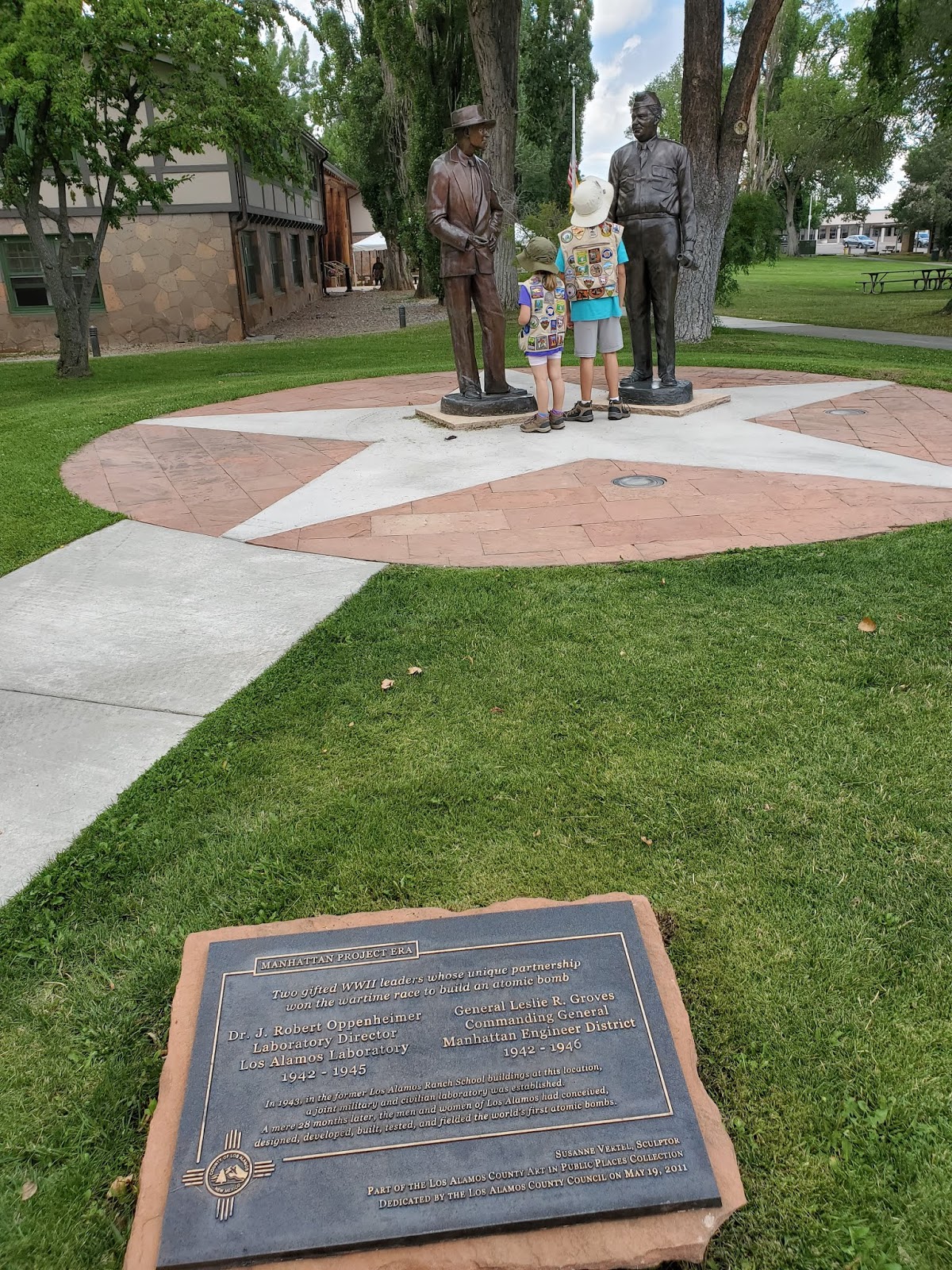
Manhattan Project National Historic Site at Los Alamos, NM

So....this is a strange one to take a five-year to, and it is an emotionally heavy one for a nine-year old.   As you probably know this is the birthplace of the atomic bomb and is where the Fatman and Little Boy bombs (that were later dropped during WWII on Nagasaki and Hiroshima respectively) were constructed.


So the Manhattan Project National Historic Site at Los Alamos was established in November of 2015 and was a partnership between a number of agencies that were trying to preserve this history.  When you visit there is a walking tour through the town that takes you to a number of sites ran by a different entities (NPS, historical society, the city, and the Los Alamos laboratories).  Through the various sites there are a number of movies and exhibits that tell the story of the area.  Of course the story is one of people being displaced so that the town could be set up as a secret base.  The main set of buildings that were taken by the government were those belonging to the Los Alamos Ranch School - a lot of history there.

Of course the whole point of converting this area into a secret base was so that the nuclear bomb could be developed.  I am quite a pacifist and my view on the dropping of these bombs is not positive - of course the way history is told is that the dropping of these bombs ended the war - which is a debatable point of view as there were other factors that contributed to the end of the conflict.  Anyhow, this visit took a great deal of contextualization, explanation, and emotional conversation.  Additionally there is the legacy of nuclear weapons on the planet and the nuclear weapons in the U.S.  ...conversations that needed to be had.


Here are some pictures of the Ranch School:


So....quick story, on the way home I asked Sister, "what did you learn?"  She said, "I think there was a war?"  She wasn't quite sure after talking about the war all day....So, yes, she was exposed to some information, but it wasn't exactly a five-year-old friendly day.  Also, as Husband has a better memory for history, I really missed his contribution to the conversations Brother and I had.   So, the take-away is that this is a very important part of U.S. history and it was very educational for Brother and I, but it was also a troubling and difficult visit due to the mass murder perpetrated by BOTH the allies and the axis powers.

Bandalier National Monument, Los Alamos, NM

Hello dear readers - My free time is so limited these days between teaching at the University, homeschooling, and our other projects!  I will be talking more about those soon, but the immediate reason I haven't written is because I spent my free time putting together a memory book with our pictures from the summer.  I made one last year and love it.  I used Shutterfly this time, but I have also used Mixbook and don't really notice a difference between the two.  Going through all of the pictures and trying to narrow them down took some time!  Anyhow, back to documenting our summer travels!


Bandalier National Monument was a trip I made with the kids while husband was working.  This is another park that has limited parking and requires the use of a shuttle.  When you get there the rangers provide an orientation and you can check out the guided tour book and then you can go hiking to see the amazing ruins.  In this park you can climb up into caves which were once used as part of the pueblo and look down over the rest of the compound.


What is amazing here is that the pueblo once was built to include these naturally occurring caves and they served as additional rooms...in this picture you can see the holes that once held the floor beams for the upper stories.


One of my favorite things to see at ruins is the pottery and other artwork that was produced by the ancestral people.  At this site there was a small section of plaster with art that has been protected with a clear cover.  I just imagine how cool this would have looked when the plaster was all intact.  


This was a beautiful place with a really great hike and things to see all along the walk.


Just to recap, we saw Bandalier while were were staying in Santa Fe, NM.  There are a number of wonderful sites within an hour drive - actually too many to see in a week - but we really enjoyed this one!

Thursday, September 5, 2019

Meow Wolf, Santa Fe, NM

In a drastic departure from our "National Parking" we visited a very unique artistic space.  There really are not words to describe this experience as I am sure some of my pictures will highlight - but it was a worthwhile and unique experience.  We were directed to this place by the manager of Pinon RV Park.  I had asked about local places to take the kids - I was actually thinking about a community pool or water park...but when she asked me if I had visited Meow Wolf I had a vague memory of reading about it when I researched area attractions in Santa Fe....later she brought over a brochure and I was sold on a visit!  Funded by George R. R. Martin (author of the Game of Thrones series) and created by an artist cooperative it is an immersive, colorful, trippy alternative reality where you explore space, get lost, find things and lose them again.  There are multiple levels of understanding the "exhibit" and though I spent a great deal of time there I did not try to follow the actual story but rather I got lost in the whimsical and metaphysical.


What are you looking at?  That is totally the question.  It's an alternative dimension full of amazing places, odd characters, unique sounds and sights.

When you first enter you start in a two-story house, but you quickly find that the house is a portal to the hidden realms.  Some of the kids' favorite ways to enter the alternative realm(s) were through the fridge and the dryer.  Here is Sister going down the rabbit hole and a shot from inside the fridge.


This is a place to be experienced, not talk about.  I love sharing my pictures, but really they don't do it justice at all.  I took the kids to Meow Wolf on a day Husband was working, but it was so amazing we went back home, waited for him to get done with work and then the four of us went back so that he could experience it too.  I couldn't imagine trying to tell him about it and it really felt wrong for us to experience it without him!  He was just as blown away as we were - it is a total trip.  In short, if you are in the area - you should totally go.


Pinon RV Park, Santa Fe, NM

I can't believe that I didn't take one picture of Pinon RV Park!  This park met all of our needs and at a good weekly price of $200.  It is located approximately 20 minutes southeast from the center of Santa Fe, so shopping and restaurants are all nearby.  We had full hookups and a spacious site with a nice shade tree.  It appeared that most of the sites were occupied by long-term residents.  There was very little (if any) movement of RVs in and out while we were there.  I'm not sure why I didn't take pictures, except that it felt more like our site in Mesa / a home, not a campground!  At this point in the travels I was also thinking about returning to AZ and might have been getting out of tourist mode!

Verizon service was strong and they offered WiFi, but we didn't need it.  They have community restrooms and showers.  I only entered the restroom once when were were leaving and it was not very clean, but I am not sure if that was the norm since we generally only use our own facilities.

There was a covered community picnic area with a grill and tables and that seemed to be the only other amenity.  This is a straightforward full-hookup place near Sante Fe.  I would certainly stay there again.  The only other thing worth mentioning was that they only take cash or checks!  I forgot about this when we checked in but the manager was very nice and allowed me to pay the next day after I ran to get cash (as I don't even have checks)!  The manager was also very helpful in directing me to attractions in Santa Fe...more on this in the next post!

Pros:

  • price
  • proximity to Sante Fe
  • Full-hooks ups
  • WiFi and excellent Verizon service
  • no traffic (settled RVs)
  • kind & helpful park manager
Con:
  • the one time I used the bathroom it was not very clean


Friday, August 30, 2019

Hovenweep National Monument & Aztec Ruins National Monument


Hello readers - it's been difficult to finish documenting the summer!  We've been back in AZ for about a month and we are back to work and school in earnest.  I want to get back to talking about the present at some point, so let me combine two amazing sites into this post to try and get through all of the amazing places left to write about!

These two sites are not close to each other and we visited them on different days.  They were actually in two different directions from our campground at Ancient Cedars RV Park and were both approximately an hour drive one-way.  Though we were camped in Colorado, these excursions took us back to Utah (Hovenweep) and into New Mexico (Aztec Ruins)!   The four corners area is full of ancient archaeological sites.

The kids and I visited Hovenweep one day Husband was working.  I have to admit that the rural drive gave me pause. As we drove further and further through the desert and passed very few other vehicles I had no cell reception and was hoping that we didn't have any emergencies!  I don't know what I was worried about in particular, but when you are driving unknown roads with two young kids by yourself, the adventure can be a bit scary - just being honest.

Anyhow, we made it to the visitor center and it was a very hot day.  While there are a number of sites to see, we opted to take the walk from the visitor center back to the Hovenweep castle to observe the sites along the canyon.


All along the walk evidence of a large settlement was visible.  But the heat was brutal and we ran out of water pretty quickly so we didn't finish the hike instead we turned back to explore the visitor center, movie, and junior ranger book.  Thankfully the ranger was very nice and willing to tell us about the sites.  Brother and Sister both had good questions and because we were the only people in the visitor center for a long time we got to spend a lot of time chatting.  This is one of the best parts of these smaller National Parks - no crowds and the friendly, available, and informative rangers.  The rangers are amazing at all of the parks, but at those parks that are less visited, the rangers have more time to spend with you.  We also found a nice picnic table in the shade and ate the lunch I packed.  Its a good idea to pack food when you go to a National Park, because in most cases restaurants are few and far between.  BTW, I love taking pictures of the kids in their vests when they are hiking...


We visited Aztec Ruins National Monument as a complete family on our last full day at Ancient Cedars RV Park.  This park is at the mid-Northern part of NM and is a very small park which preserves a huge pueblo and boasts the largest reconstructed Great Kiva.


Aztec Ruins were not inhabited by the Aztec - this is a misnomer that stuck.  This is another site of the ancent puebloan people.  The site does have a really cool story about the archaeologist who excavated it and reconstructed the Kiva.  He grew up playing in the ruins and later purchased the property and conducted his life's work there.  The visitor center is in the building that was once his home.  What makes this place unique is how intact parts of the ruins are and how visitors are allowed to walk through parts of the intact buildings.

Here we are walking through a series of subterranean rooms which have the original ceilings (floors to the stories above).  Walking through these rooms one felt the sacredness of the space.  We spoke in hushed tones despite being alone.  There was a certain seriousness about these rooms.  I don't know how else to describe it.


Here is a view of the building we walked through from the outside.  Notice the small square "window" in the picture above - those are at ground level in the next picture.


There were also some really cool decorative elements in the design of the pueblo.  Notice in this picture the darker rocks used to create a line across the front of the building.  The rocks are actually green and were brought from afar (can't remember exactly where) for decorative purposes.


The pueblo is huge - here is one picture that tries to capture the size.


Finally, I want to share the amazing reconstructed kiva.  For once I could really imagine this being the center of activity of the community.  Having the building plastered and with the roof intact it is obvious this was an important place.  What a treat to see one restored.


A special aspect of this Great Kiva are the many antechambers and windows overlooking the main room.  The great circular disk near the pillars are those originally used to support the roof.  Plexiglas is installed at various points in the kiva to allow you to view beneath the plaster.  It was an exceptional experience.  Here is a view from the outside.


Many modern-day tribes trace their ancestry to the ancient puebloan people.  The movie in the visitor center highlighted some of these tribes and we heard in their own words why this place is special.  I found it to be special, yet also somewhat sad.  What truths did these people know that we do not? What was it like to live in this community around this grand kiva?

We loved this park and hope to visit again.

Monday, August 19, 2019

Canyon of the Ancients National Monument (BLM)

Last summer I learned the difference between a National Park and a National Monument - namely the President can create a National Monument and Congress creates a National Park.  I also learned that the National Park Service oversees 419 national units/parks which include 19 naming designations including "National Park," "National Monument," "National Lakeshore" and "National Historic Site."  When you purchase the National Park Passport book you obtain a list and map of the complete park system so that as you plan your trip you can be sure to include as many national parks as possible.

This was a bonus stop for us because I didn't know it existed before we checked into the Ancient Cedars RV Park.  The reason it escaped my planning attention is because this National Monument is administered by the Bureau of Land Management instead of the National Park Service.  Because of this distinction this monument is not included in the National Parks Passport Book, which had served as my definitive list of all national sites of interest prior to learning about BLM parks.  While at the visitor center and museum I was able to secure a list of all BLM parks to add to my National Park Passport Book.  But let me say that this park is most certainly worth a stop especially the museum which has a very interesting story to tell.

Escalante Pueblo located on a half-mile trail behind the visitor center overlooks the McPhee Reservoir
The museum is extremely well put together, engaging, and has a vast collection of ancient artifacts.  I spent a long time looking at exhibits before realizing what I was looking at -  I was looking at artifacts that were saved from flooding by the Dolores Archaeological Program (DAP).  The DAP was required prior to the construction of the McPhee Dam which would ultimately create the Reservoir (pictured above) and flood many archaeological sites.  The DAP took place over 7.5 years, employed over 500 people, and collected information from 1600 archaeological sites.  In 1978 it was the largest single archaeological contract awarded in American history.

Here is a map of the Dolores River prior to the dam being built.  All of the excavated sites appear as dots.


Here is a map of the reservoir that was created after the dam was built....so yeah, these sites are now under water.


It appears that many steps were taken to preserve the past gather as much as possible prior to the creation of the reservoir.  However, it is disconcerting that these sites were knowingly flooded.  A ranger told me that extensive surveys were done to determine where the reservoir should be placed.  There was public comment and then the DAP.  The reservoir serves as the water source for the area including a great deal of farm land.  Nevertheless modernity and history collide in this place as land uses change over time.

A ranger told me that in the basement of the museum was a vast collection of other artifacts along with the documentation related to its discovery.  Apparently researchers can access the artifacts to continue to discover more about the ancient puebloans of the area.  I was told that the museum is there to tell the story that the sites can no longer tell.  I have never been to a museum set up to honor ancient places that were purposely destroyed.  It was a bit hard to stomach, but then again the collection was amazing and fascinating even including artifacts partially excavated (still in dirt).

The actual lands that the BLM manages are vast and there are still many other sites that were not affected by the reservoir.  One of those sites is Lowry Pueblo.  A portion of the museum held artifacts from this preserved site as well.

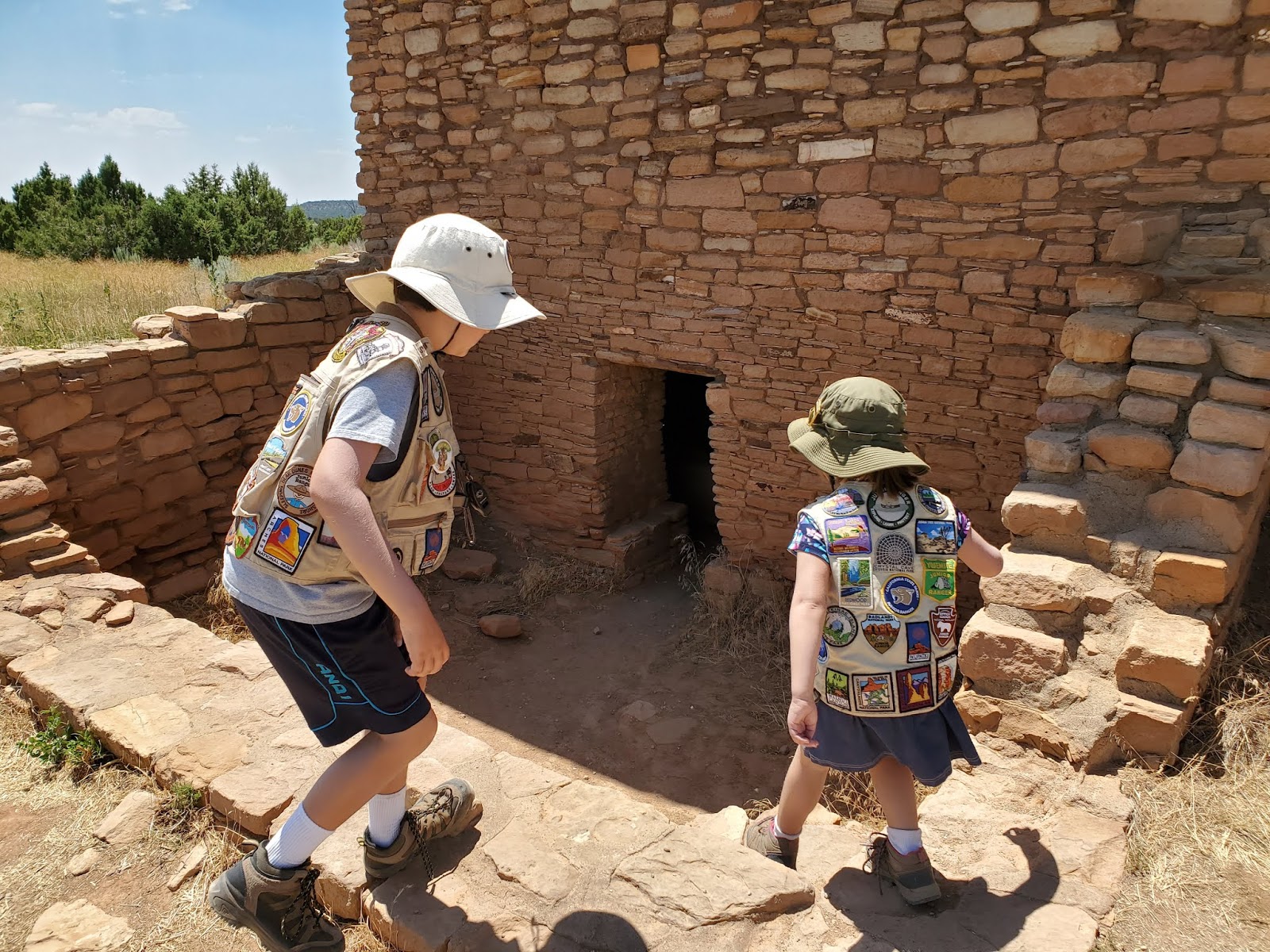
This site is notable in that it has been partially reconstructed and a shelter has been built over it.  Visitors are also allowed to enter the structure through a small door...


...and observe a kiva from the ground level.


However, one of the most fascinating aspects of this kiva was the fact that there were remains of plaster along the bottom wall where there once was a decorative panel that had been photographed by early archaeologists when it was first excavated.


The first archaeologists thought that by re-burying the art it would preserved it when in fact this hastened the demise.  When later archaeologists excavated it again they found the decorative panel was almost all gone.  Only a small piece remained and was removed for display in the museum.  I had a very hard time taking a picture due to the glare from the glass.  But I thought seeing the wall art of the ancient puebloans was one of the coolest things in the collection.  


Here are some more amazing photos of the Lowry Pueblo site.  Including the Grand Kiva which was not part of the covered site.


There are many other sites one can explore in the Canyon of the Ancients NM, but we didn't have the time to explore others on this trip.  I look forward to future visits to the preserved sites of these ancient people.  I would also enjoy visiting the museum again.